

Part One – The Cases
By Joshua Seemungal
ROOTT Investigations
A former patient and the relatives of three women treated by obstetrician and gynaecologist Dr Vishal Bahall in Trinidad and Tobago have raised separate concerns involving surgical complications, postoperative care and deaths following hospital treatment between 2021 and 2024.
Surgical complications and deaths following treatment do not, by themselves, establish negligence or professional misconduct; as such, no finding is made in this article that Dr Bahall caused any patient’s injury or death or breached the applicable standard of care.
ROOTT’s investigation draws on accounts from patients and relatives, medical and regulatory records, filed court documents, and official correspondence, as well as responses from Dr Bahall and the relevant authorities.
In a letter dated 13 September 2026, attorney Jared Jagroo said his client, Dr Bahall, “Categorically denies any wrongdoing, negligence, professional misconduct, dishonesty, misrepresentation of qualifications or improper clinical conduct.”
Jagroo said Dr Bahall would not disclose confidential patient information about specific cases without appropriate authority, explaining: “This is not an evasion of your questions. It is the observance of a professional obligation.”
Dr Bahall is the Head of the Department of Obstetrics and Gynaecology at San Fernando General Hospital and holds gynaecological-oncology surgical leadership roles at the ERHA and TRHA.
The cases in question date from 2021 to 2024.
During that period, at least two civil medical-negligence claims were filed against the South West Regional Health Authority arising from surgeries in which Dr Bahall was involved.
In October 2024, the relatives of 52-year-old Ann Agard, who died months after undergoing multiple surgeries, initiated legal action.
The statement of case alleged that Agard suffered injuries to her ureter (the tube that carries urine from a kidney to the bladder), her vagina and bowel as a result of alleged negligence.
In May 2026, the relatives of the deceased Susan Raymond sued, claiming that the 65-year-old sustained injuries to her bladder and left ureter as a result of alleged negligence.
The claims are yet to be determined by the court.
Dr Bahall disputes the allegations.
“I do a lot of surgeries, but there is no surgery where you can say that there was something that went wrong, in terms of that being medical negligence; nothing. Obstetrics and gynaecological surgeries are very high risk. My complication rate is lower than international standards,” Dr Bahall said in 2024.
He added: “Yes, there are patients who would never be happy because something went wrong, but 99 percent of the time, it has nothing to do with that one thing, but has more to do with a systemic failure, or basically, a patient having high-risk surgery, or the patient was more advanced than they thought. There are many different variables, but the bottom line is there was nothing done wrong at all,” he added.
Susan Raymond
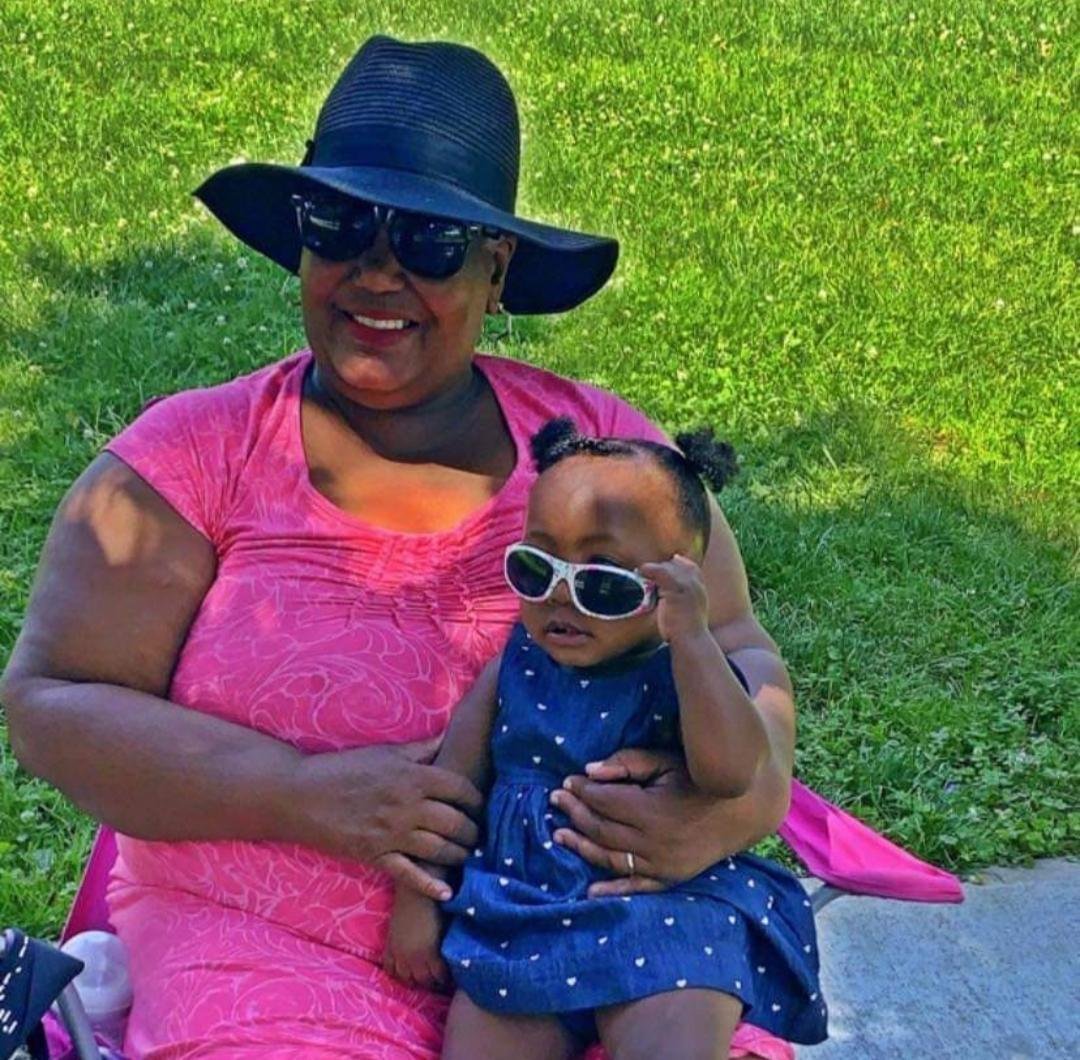


In early 2021, 65-year-old Susan Raymond was diagnosed with stage II endometrial cancer, as confirmed in her medical records.
Dr Bahall performed a total abdominal hysterectomy (TAH), bilateral salpingo-oophorectomy (BSO) and omentectomy on March 19, 2021, at the San Fernando General Hospital.
● Total Abdominal Hysterectomy – A surgical procedure to remove the uterus and cervix
● Bilateral Salpingo-Oophorectomy – A surgical procedure to remove the ovaries and fallopian tubes
● Omentectomy – A surgical procedure to remove some or all of the omentum, a fold of fatty tissue that hangs from the stomach and covers abdominal organs.
According to relatives, Raymond reported being unable to urinate within hours of the procedure.
“We were speaking to the doctors, trying to find out what’s going on. That’s when she told us that they said they are going to have to go back in and cut her open because she’s actually not urinating,” a relative recalled.
Relatives said that after a second procedure, Raymond had a colostomy, which collects stool through a surgically created opening in the abdomen.
“They kept telling her to come back for appointments that we thought were too far apart. We like, you know what you need to just come up here (to New York) because you’re having a big risk of infection,” a relative said.
Susan agreed to continue her cancer treatment at Kings County Hospital in Brooklyn.
“She was peeing blood in the ICU…She was catching infection after infection. They said they didn’t know what the full situation was. They were just treating her infections, hoping that, you know, it would just go away,” a relative said.
On July 27, 2021, Susan Raymond died.
“My mom wanted to live. My mom is not here. It’s still hard to say that. We were literally just watching her die. And that was really hard,” a relative said.
Surgical Notes
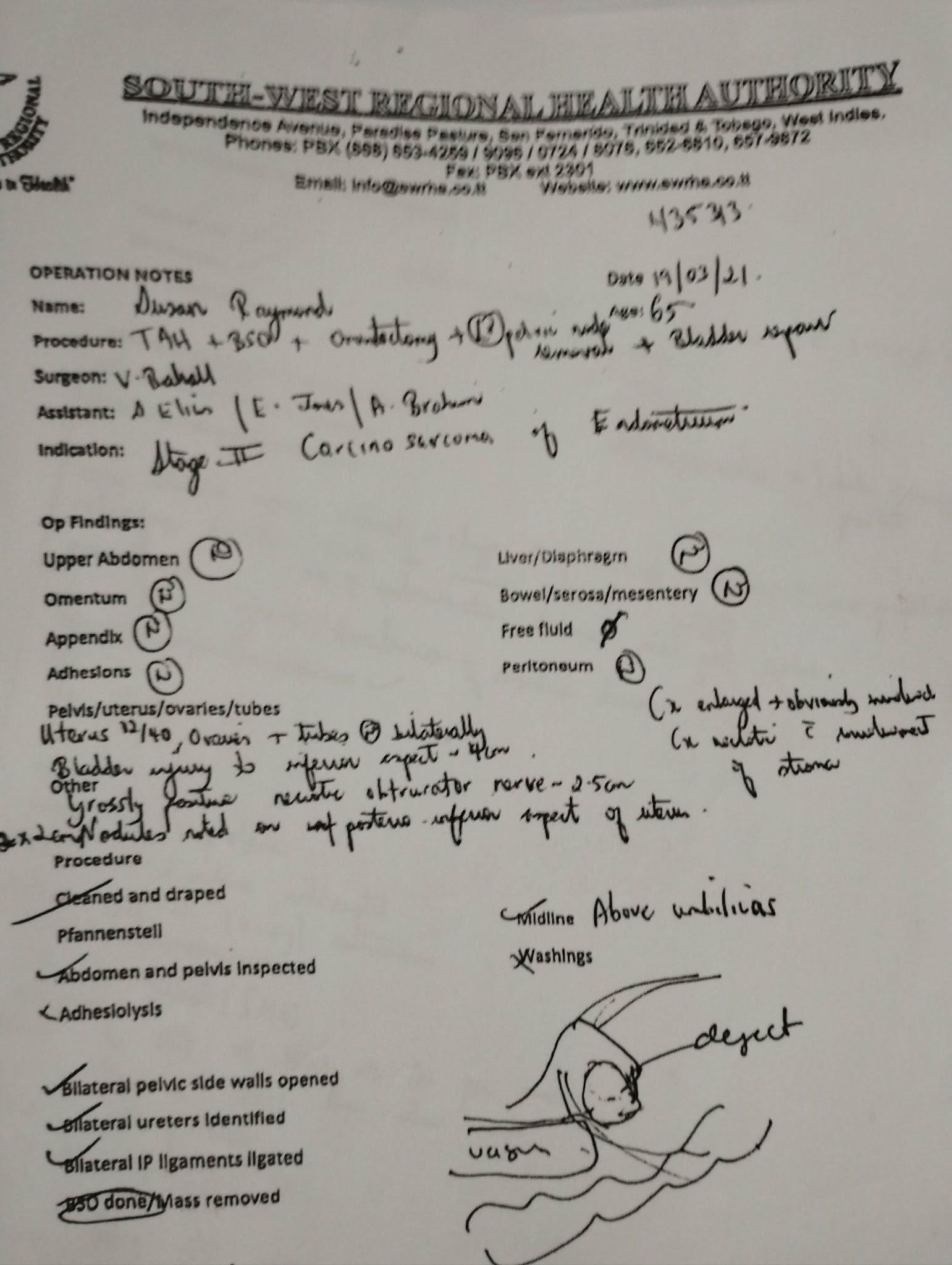
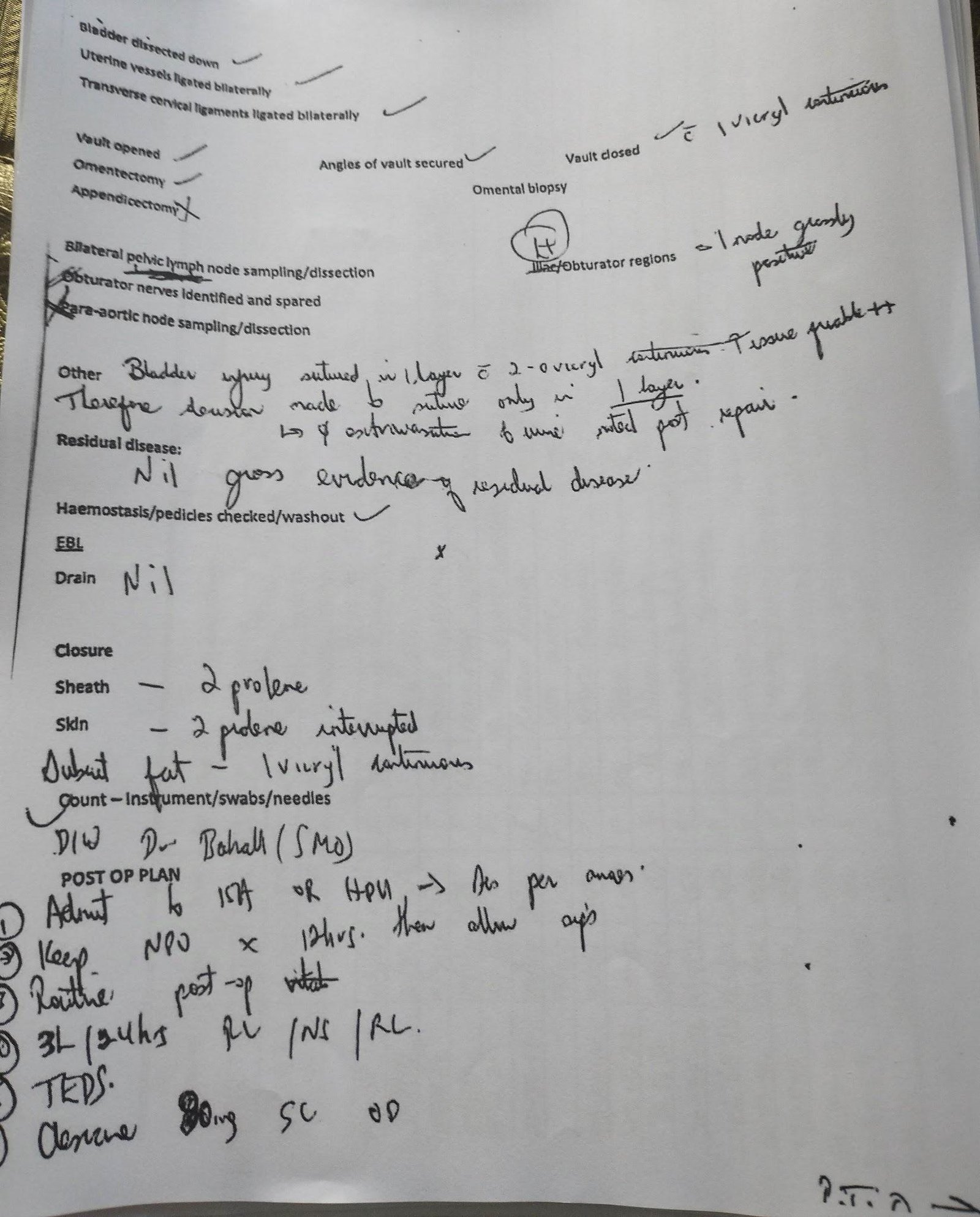
Dr Bahall’s operation notes indicate that a bladder injury occurred during the March 19, 2021, procedure.
The operation note records that Dr Bahall repaired the bladder injury.
On March 20, 2021, her abdomen was reopened during a second operation.
Urologist Dr Adrian Ramkisoon, in his operation notes, stated that Raymond’s left ureter, the tube carrying urine from the left kidney to the bladder, was torn.
He also reported that there was a bladder leak.
Dr Ramkisoon’s notes stated that he reimplanted the left ureter into Raymond’s bladder.
Legal Action
In May 2026, Raymond’s husband, Timothy Carrington, filed a lawsuit against the SWRHA, claiming that his wife sustained injuries to her bladder and left ureter as a result of medical negligence.
The statement of case alleged that the surgical team led by Bahall attempted the bladder repair.
Carrington alleged in his statement of case that Raymond was denied the right and expectation of having experienced staff perform the bladder repair. He claimed that the surgical team of gynaecologists attempted a procedure better suited to urologists.
“The Defendant (the SWRHA) is negligent for allowing the Surgical Team to perform the bladder repair surgery, which surgeries were outside of their scope and remit as gynaecologists, as well as its failure to ensure that these surgeries were performed by the appropriate surgical speciality…The Claimant avers that, at the time of the first Operation, Dr Vishal Bahall was only qualified to practice Obstetrics and Gynaecology but was not qualified in the field of Urology.
“The Claimant also avers that during the first Operation, the Defendant failed to provide Susan Raymond, deceased, with a suitable, qualified, competent, skilled and experienced urologist to ensure that both ureters of Susan Raymond, deceased were protected by ensuring that stents were placed inside the said distal ureters,” the statement of case stated.
Carrington’s legal team also argued that the surgical team, led by Dr Bahall, was negligent in failing to carry out all checks to ensure that the patient’s ureters were not damaged before the patient’s abdomen was closed.
Dr Bahall denied wrongdoing in the patient’s care.
Christiana Narine

In November 2023, 67-year-old Christiana Narine of Hermitage Village was diagnosed with stage-one endometrial cancer.
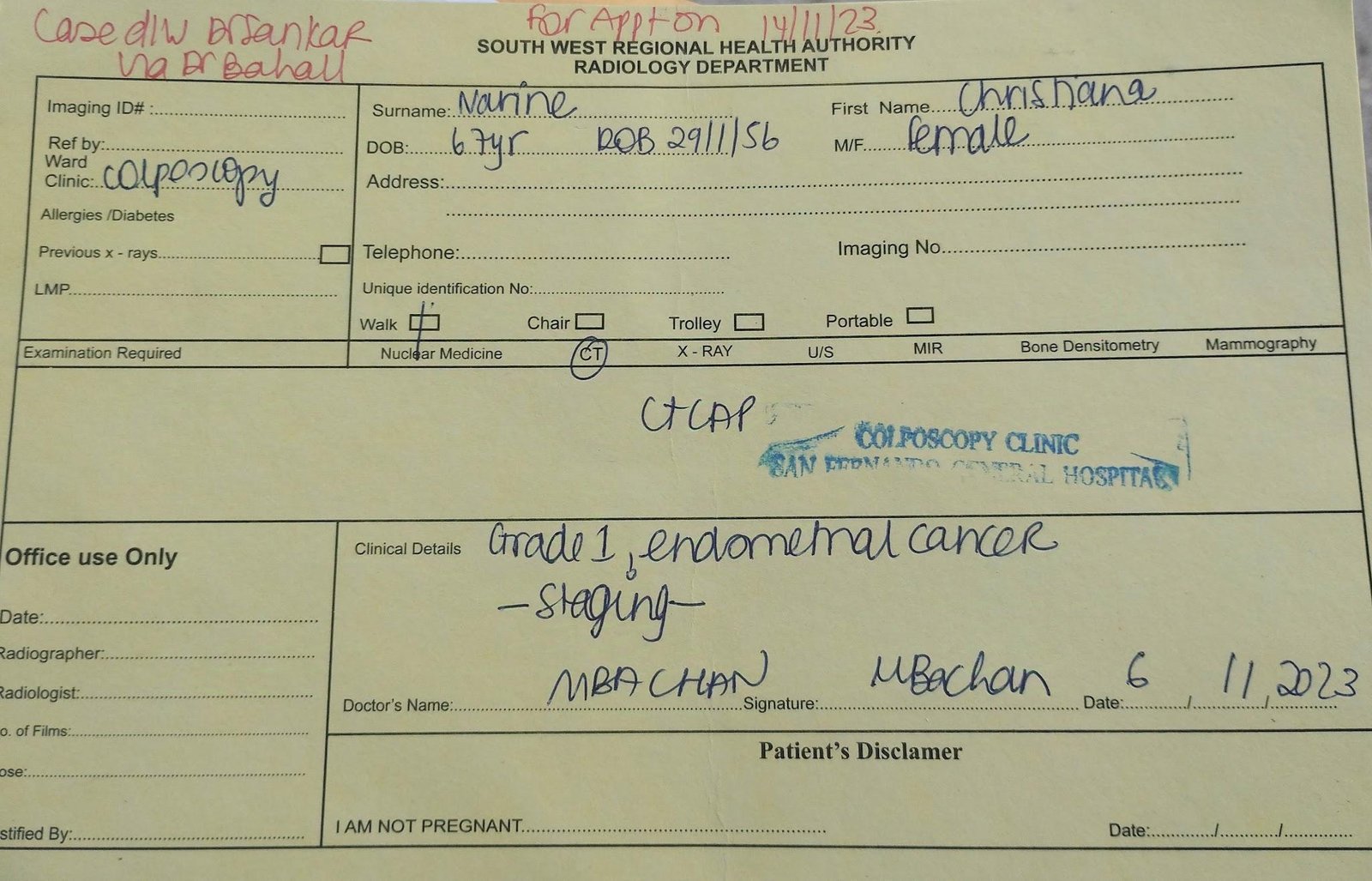
After consulting with Dr Bahall, Christiana underwent a total abdominal hysterectomy (TAH) on December 8, 2023, to remove the uterus and cervix through an incision in the abdomen, and a bilateral salpingo-oophorectomy (BSO) to remove both ovaries and fallopian tubes.
According to relatives, in the days after surgery, they noticed that Christiana’s abdomen appeared swollen.
“Blood came out initially, then, after a time, it started to come out yellow and runny. It had a bad smell. It was just oozing a lot,” a relative said.
Christiana continued returning to the clinic for checkups.
According to her medical card, she attended the San Fernando General Hospital’s oncology department on six occasions following surgery.
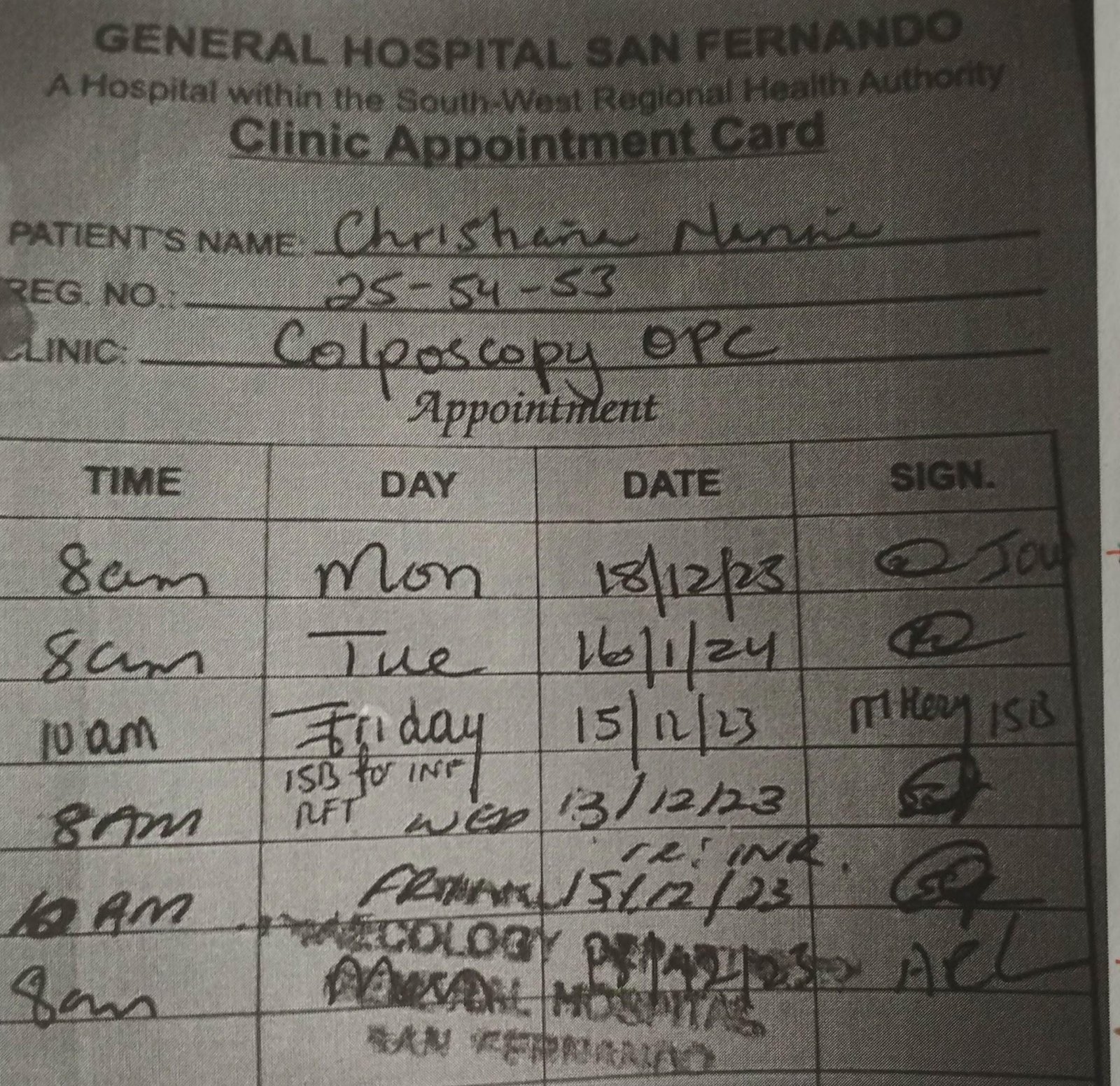
On December 27, 2023, according to a relative, Christiana returned home from a clinic visit and, while coughing, her surgical wound on her abdomen opened.
ROOTT viewed pictures of the opening, but determined it was too graphic to publish.
Christiana was taken back to hospital and underwent further surgery, according to relatives.
According to relatives, doctors told them they had identified faecal contamination and that another emergency procedure was required.
Christiana died on January 2, 2024.
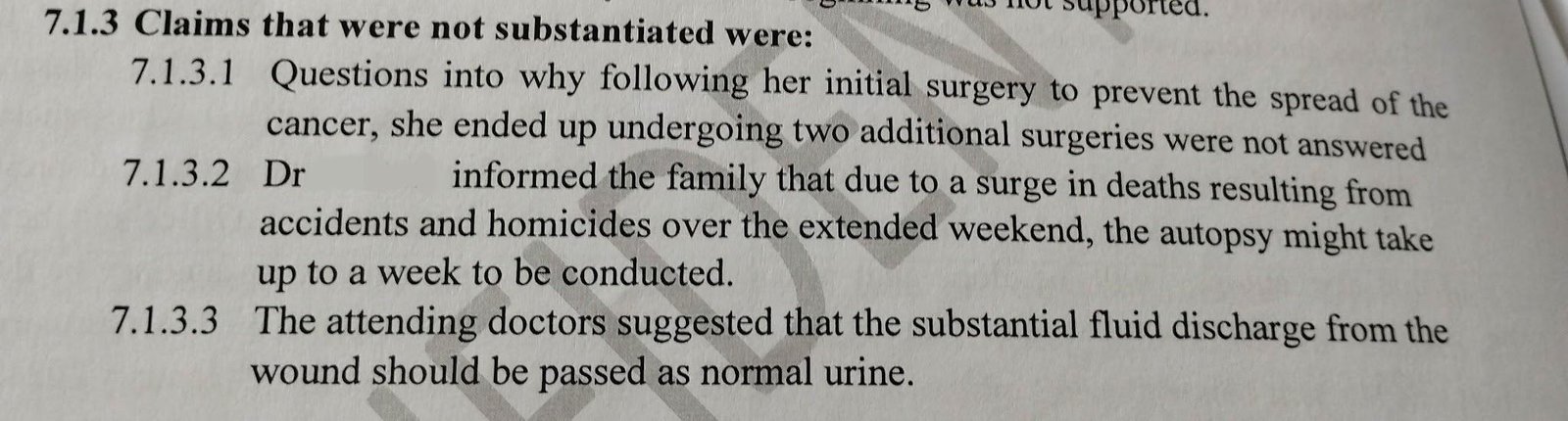
A post-mortem examination report confirmed claims of faecal contamination.
Initial Death Certificate and Post Mortem Findings
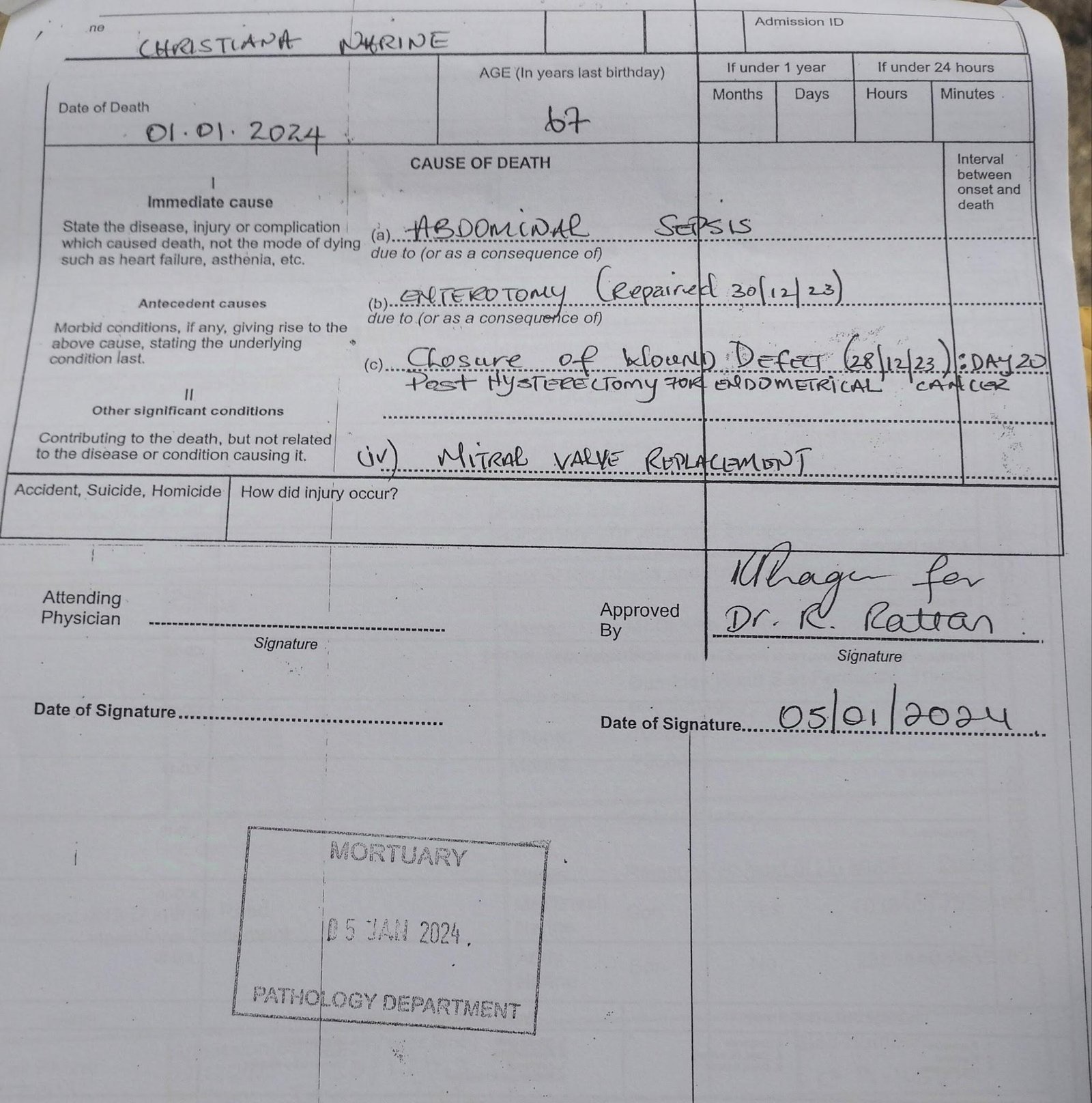
The original death certificate, dated January 2, 2024, recorded pulmonary hypertension (abnormally high blood pressure in the blood vessels of the lungs), heart failure and advanced stage 3C endometrial cancer among the causes of death.
The Narine family petitioned for an autopsy.
The post-mortem certificate, dated January 11, 2024, listed abdominal sepsis as the immediate cause of death and recorded a small-bowel enterotomy (a surgical incision made into the intestine) and subsequent surgical treatment in the causal history.
It also noted her prior hysterectomy for endometrial cancer and mitral-valve replacement.
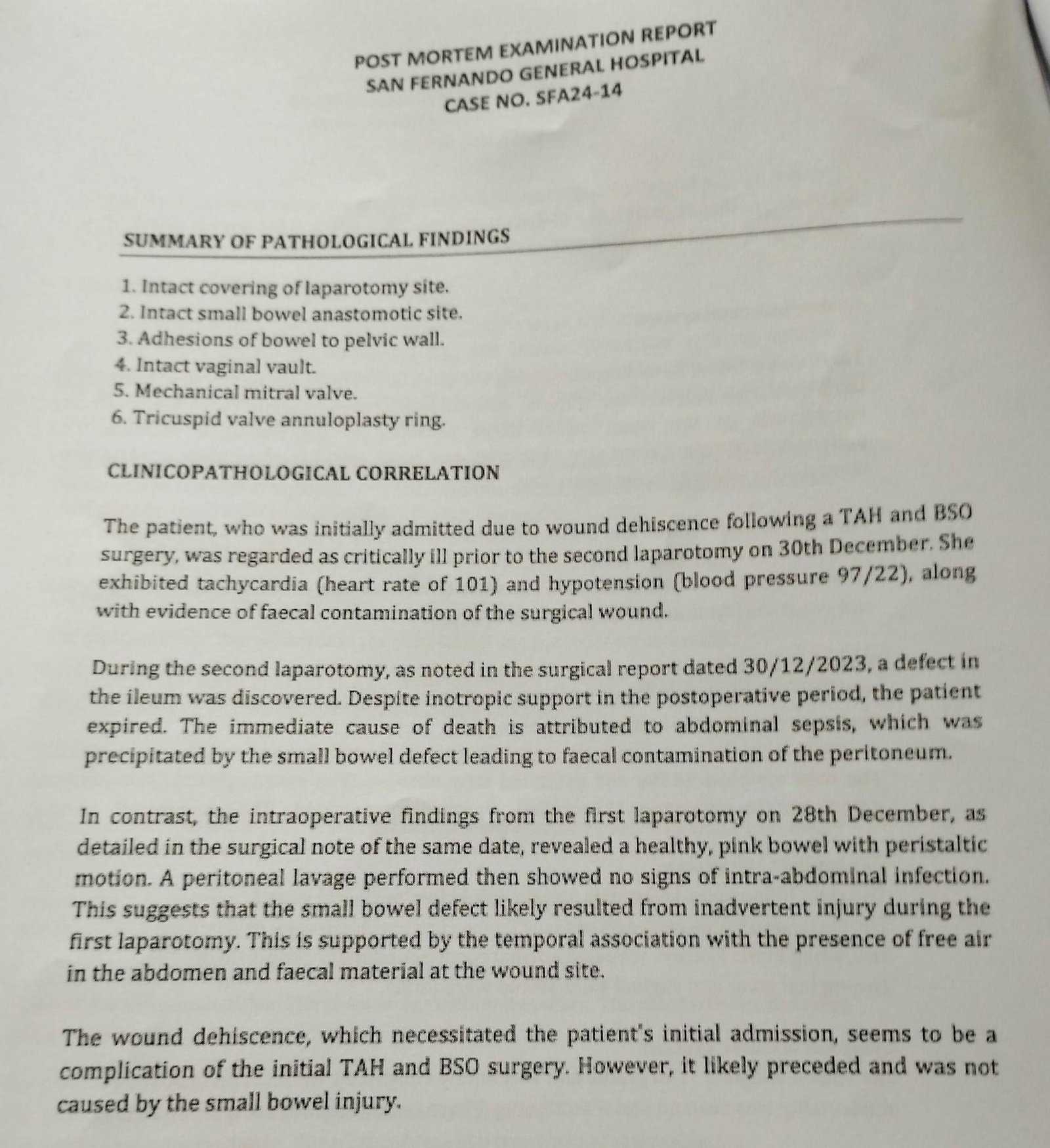
According to the pathology report by Acting Registrar of Pathology at San Fernando General Hospital, Dawn Meyers, “The patient, who was initially admitted due to wound dehiscence following a TAH and BSO surgery, was regarded as critically ill before the second laparotomy on 30th December. During the second laparotomy, as noted in the surgical report dated 30/12/2023, a defect in the ileum (the last part of the small intestine) was discovered. The immediate cause of death is attributed to abdominal sepsis, which was precipitated by the small bowel defect leading to faecal contamination of the peritoneum (thin tissue that lines the abdominal wall and covers most of the organs in the abdomen).
“In contrast, the intraoperative findings from the first laparotomy on 28th December, as detailed in the surgical note of the same date, revealed a healthy, pink bowel with peristaltic motion (rhythmic muscle contractions that move contents through the digestive tract). A peritoneal lavage (a medical procedure where a sterile salt or fluid solution is washed through the peritoneal cavity (the space in the abdomen containing the stomach, liver, and intestines and then removed to check for internal bleeding, infection, or cancer cells) was performed and showed no signs of intra-abdominal infection. This suggests that the small bowel defect likely resulted from inadvertent injury during the first laparotomy,” the report stated.
It attributed the bowel defect to a likely inadvertent injury during the December 28 reoperation. It did not identify the individual who caused the injury or make a finding of negligence.
At a January 16, 2024, SWRHA case review meeting, Dr Bahall was quoted as explaining his version of events.
A SWRHA internal report quoted him as saying that the patient had wound dehiscence (the reopening or splitting apart of a surgical wound), underwent repair, had a heart issue and received the necessary referrals and consultations.
Another doctor, Dr Ryan Rattan, was quoted as saying: “The reason for the bowel perforation could not be determined using histological testing. There was no Pathology testing done on the part of the bowel that was removed.”
Pamela Narine said the family wants a proper investigation into the circumstances surrounding Christiana’s treatment.
They have also hired an attorney to explore their legal options.
Without addressing confidential clinical details, Dr Bahall’s attorneys said he “denies wrongdoing in relation to each of the patients identified.”
Bernadine Catherine Jones
Medical records confirm that 61-year-old Bernadine Catherine Jones died on October 11, 2023, hours after undergoing a total abdominal hysterectomy, bilateral salpingo-oophorectomy and bilateral pelvic lymph node dissection performed by Dr Bahall at Scarborough General Hospital.
Her death certificate stated her causes of death as “hypovolemic shock, status post total abdominal hysterectomy … and bilateral salpingo-oophorectomy.”
Hypovolaemic shock results from a severe loss of circulating blood or other fluid.
The death certificate identifies a medical cause or mechanism of death but does not determine that negligence occurred or identify who, if anyone, was legally responsible.
One of Jones’s daughters, Kathy Ann Gordon, wrote the TRHA seeking information about her mother’s death.
In her email to the TRHA, Gordon said her mother appeared fit and well before the surgery.
“We acknowledge that with every surgery there are always risks and complications that may be unavoidable. Given the findings of the post-mortem report, for transparency and to help us understand, we would like to request a copy of her medical notes, please.
“In addition, we would appreciate in your review, the following be answered and/or outlined:
We would like to understand the sequence of events that led to the death of our mother.
What contributed to her sudden loss?
Were there any deviations from the correct procedure and/or practice if any during the operation and postoperatively?
Were there factors in the care and management that directly contributed to her loss?
Were the appropriate observations and management carried out during the procedure and postoperatively?
Were the appropriately skilled and experienced professionals involved in her care?
Were there any significant concerns appropriately escalated during any period of deviations from the normal?,” the letter said.
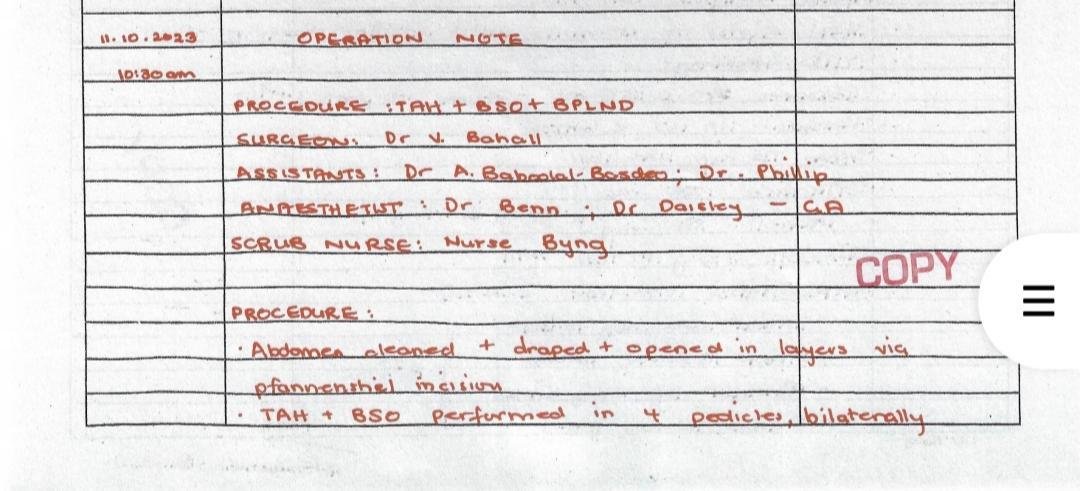
A 10:30 am entry in the progress notes supplied to relatives listed Dr Bahall as the surgeon.
The procedure note stated, “Abdomen cleaned and draped and opened in layers via Pfannenstiel incision. TAH and BSO performed in four pedicles, bilaterally.”
In the copy of the records supplied to the family, the next visible progress-note entry is a blood transfusion at 1.38 pm.
The note does not state the reason for the blood transfusion, but bleeding was noted at the surgical incision site.
Jones’s blood pressure was listed at 79/56.
The next note is listed at 2:22 pm.
In it, nursing staff were recorded as alerting doctors that the patient’s blood pressure was falling.
A plan was recorded for continued blood transfusion and reassessment after 30 minutes.
Under a 3:15 pm note, it was recorded that the patient was seen by an anaesthesiologist and there was another mention of low blood pressure.
At an unspecified time, the nurses’ notes recorded that the patient was stressed and that CPR had begun.
In the copy of the nursing notes supplied to the family and reviewed by ROOTT, no entry appears between the notes timed at 3.15 pm and 5.55 pm.
This does not establish that no monitoring or care occurred. ROOTT has asked whether additional observation, anaesthetic, recovery-room or resuscitation records exist.
Jones was later certified dead, and her daughter was informed of her death at 6:05 pm.
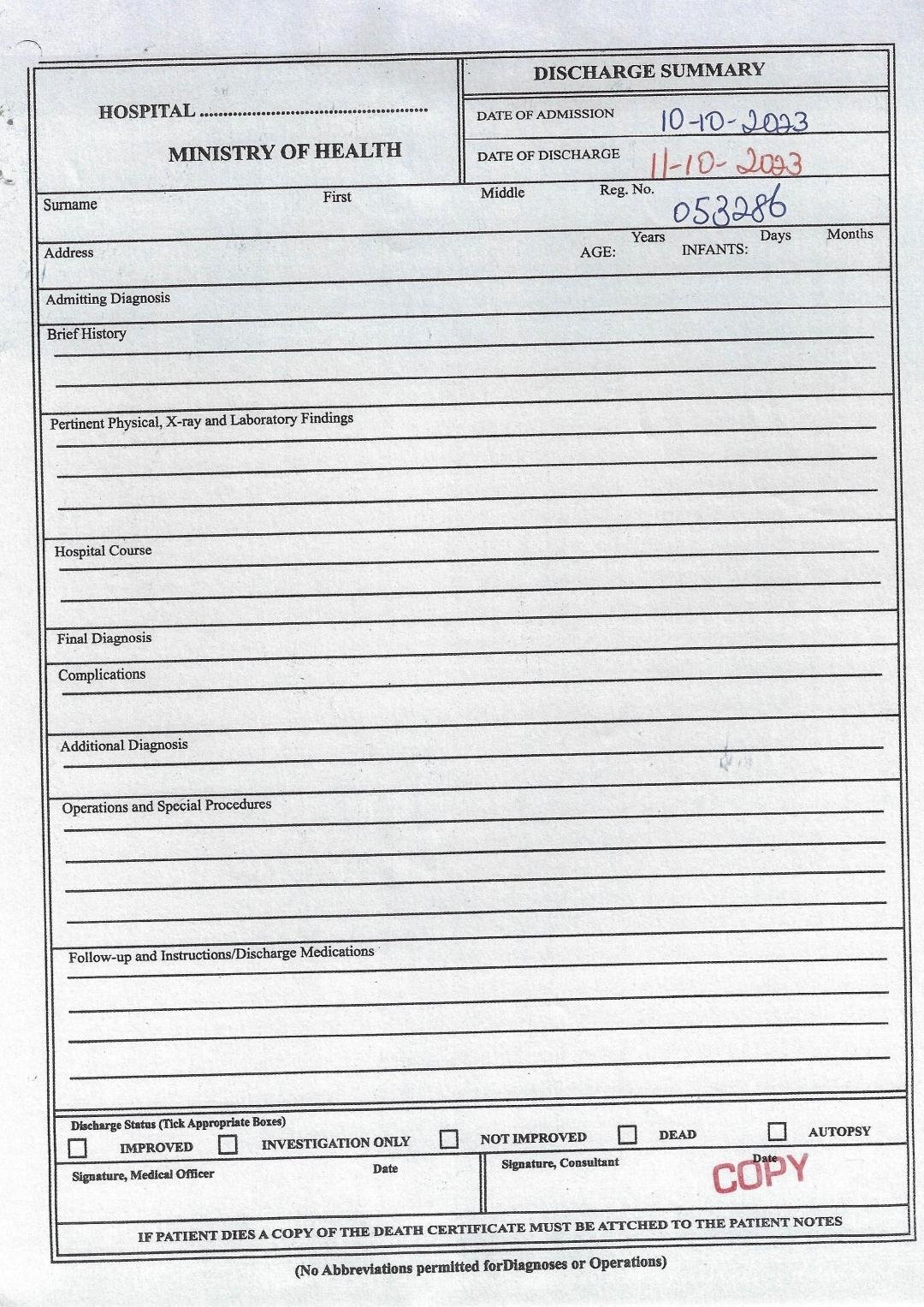
A discharge-summary form included in the records supplied to the family was blank. ROOTT has asked whether a completed final summary or death summary exists.
In 2025, former Acting CEO of the TRHA Allison Rambaran-Andrews confirmed that the authority received a complaint from Jones’ family and said the matter was under investigation.
Dr Bahall denies wrongdoing in this patient’s care.
This month, questions were sent to the TRHA’s Communications Department about Jones’ case. Receipt of the email was not acknowledged.
When ROOTT called the Communications Department on September 15, a member of the department said she could not provide the information.
The member advised that ROOTT should contact the TRHA CEO, Dr Delmon Baker.
Attempts to contact Dr Baker via email, office line and cell phone were unsuccessful.

Alana Ransome
In 2025, Alana Ransome formally complained to the Medical Board about her consultation, consent and subsequent surgery by Dr Bahall.
The committee that considered the complaint found no evidence of infamous or disgraceful conduct, found no breach of duty and concluded that Bahall acted appropriately.
However, Ransome maintains that she felt pressured into surgery and disputes aspects of the consultation and consent process.
Ransome accused Dr Bahall of misstating the reason for her original visit, misleading her about the size of her uterus, incorrectly stating that she introduced the possibility of cancer, incorrectly stating that she chose to undergo a total abdominal hysterectomy, and not telling her that the removal of her ovaries was being contemplated.
She also questioned the legitimacy of Dr Bahall’s fellowships in gynaecological oncology, stating that proof of the qualifications was necessary given that Dr Bahall advised her on the basis that he was an oncologist.
“Your womb lining is thickened, and as an oncologist, I am telling you this can become cancerous,” she claimed Dr Bahall told her, in her report.
Ransome said she trusted Dr Bahall’s judgement and alleged that alternative treatments were not explained to her.
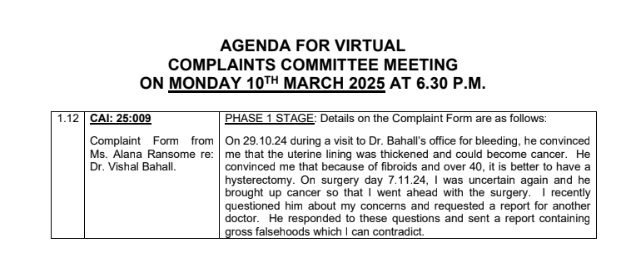
According to Ransome’s complaint, she attended Dr Bahall’s office on 29 October 2024 because she found that her menstrual cycle lasted longer than usual on several occasions.
However, she alleged that Dr Bahall told her that her uterine lining was thickened and could become cancerous, and because she had fibroids and was over 40 years old, it would be better to have a hysterectomy.
Ransome claimed that on the day of surgery, 7 November 2024, she remained uncertain about the necessity of the procedure, but alleged that Dr Bahall again raised concerns about the threat of cancer, after which she proceeded with the operation.
In response to Ransome’s report, Dr Bahall denied forcing or improperly convincing Ransome to undergo surgery.
He said she presented with abnormal uterine bleeding and a feeling of a mass in the abdomen; that examination revealed a 20-week-sized uterus; and that ultrasound showed multiple fibroids.
Dr Bahall said he had counselled her on myomectomy, examination under anaesthesia (EUA), biopsy and hysterectomy (TAH), and had discussed the pros and cons.
He said Ransome raised the possibility of cancer, that he explained fibroids are not cancerous but uterine cancer is possible, and that histology is required to determine whether cancer is present.
Dr Bahall said that Ransome expressed that she wanted a TAH and had no desire for children.
He said he explained ovarian conservation versus bilateral salpingo-oophorectomy, and that she rejected myomectomy and EUA/biopsy because she did not want to undergo two procedures.
Although Bahall disputed Ransome’s claim that he introduced the discussion of cancer, he acknowledged that cancer was discussed.
He added that he advised her that there is a risk of cancer in women over 40 with abnormal bleeding and that TAH would be recommended for women her age with no desire for children.
According to Bahall’s response, surgery revealed a 20-week-sized fibroid uterus, grossly normal ovaries and a grossly normal uterine cavity.
Histology confirmed fibroids with no evidence of cancer.
He said Ransome was discharged on the first postoperative day and was later recommended hormone replacement therapy with Progynova for menopausal symptoms.
According to the committee’s minutes, in June 2025, Bahall emailed the Medical Board of Trinidad and Tobago (MBTT) with copies of an admission letter, a consultation record and a consent form.
The minutes said the admission letter contained the procedure and had been emailed to Ransome before surgery.
The committee found no evidence of infamous or disgraceful conduct on the part of Dr Vishal Bahall, found no breach of duty and concluded that he acted appropriately.
Afterwards, Ransome sought information from the MBTT concerning Bahall’s gynaecological oncology qualifications and the Board’s vetting of them.
Ransome also sought information concerning third-party promotional material which described Bahall as having an ESGO fellowship. Bahall’s attorneys said he did not author or supply that description.
Dr Bahall’s Response
In a letter dated 13 September 2026, attorney Jared Jagroo said Dr Bahall “categorically denies any wrongdoing, negligence, professional misconduct, dishonesty, misrepresentation of qualifications or improper clinical conduct.”
Jagroo said an adverse surgical outcome should not be treated as proof of wrongdoing. “The occurrence of a recognised surgical complication does not, without more, establish negligence, incompetence or misconduct,” he wrote. He said any responsible assessment would require consideration of the patient’s underlying disease, the complexity of the surgery, recognised risks, contemporaneous records, postoperative management and the outcome of any formal clinical or regulatory review.
The attorneys declined to provide confidential patient histories without appropriate authority. “This is not an evasion of your questions,” Jagroo wrote. “It is the observance of a professional obligation.” ROOTT recognises those confidentiality obligations and draws no adverse inference from Dr Bahall’s refusal to disclose protected patient information.
On Dr Bahall’s qualifications, Jagroo said four matters must be distinguished: his specialist registration in Trinidad and Tobago, his Belfast fellowship training, formal RCOG subspecialty accreditation and ESGO certification. “One is not a substitute for, or proof of, another,” he wrote.
The letter said Dr Bahall’s recognised specialist registration is in Obstetrics and Gynaecology and described his 18-month Belfast training as “real, supervised and competency-based.” It said the programme included clinical and operative exposure and a structured logbook, and that the supporting documents were submitted to the Medical Board and “recorded as an additional qualification/training credential.”
Jagroo said Dr Bahall had never claimed that the Belfast fellowship resulted in an RCOG Certificate of Subspecialist Accreditation. He also said: “Our Client does not claim to hold an ESGO Fellowship or an ESGO certificate. He has never represented that he was awarded either.”
The attorneys acknowledged that an “ESGO fellowship” description appeared in third-party material but said Dr Bahall “did not author or supply that description.” ROOTT has asked the publishers of that material to identify its source and whether Dr Bahall reviewed or approved it.
Dr Bahall’s attorneys maintain that he may describe the field in which he trained and practises. They said there is “a critical difference between describing one’s area of subspecialty practice and falsely claiming to hold a particular statutory registration or external accreditation.” ROOTT has asked the Medical Board to clarify whether it agrees with that interpretation.
SWRHA Response And Right Of Reply
In response to initial questions about the patients’ claims concerning procedures at San Fernando General Hospital in 2024, the SWRHA said it could not support allegations that were not grounded in full and frank disclosure and cited legal duties concerning sensitive personal information, confidentiality and the right to private life.
The SWRHA also said that some of the matters were the subject of litigation and that it had been provided with what it described as vague second- and/or third-hand allegations. It therefore declined substantive comment at that time and reserved its rights.
The SWRHA was provided with the names, ages and written accounts of the complainants associated with the SWRHA who were included in the story and informed the Authority that it had obtained a copy of the investigative report into Narine’s death.
The SWRHA maintained its original response.
On September 10, 2026, ROOTT sent updated questions to the SWRHA’s Communications Department and its Director, Dr Anand Chatoorgoon, among others, about Dr Bahall’s fellowship and the case complaints.
ROOTT received no response from the Authority’s communications department.
Dr Chatoorgoon said, in part, in an email response that, “I certainly don’t have the answers to many of your questions. Did the two patients you mentioned lodge any complaints with the SWRHA? Insofar as you know, have these patients’ complaints been investigated? At this time, I really know nothing about these two patients. You are welcome to give the two patients my telephone number, as I would love to hear from them.
“What I do know is that Dr Bahall enjoys a good reputation among many of his peers and senior consultants in the field of Obstetrics and Gynaecology, in both the private and public sector.”
ROOTT obtained a February 2018 email thread in which Dr Chatoorgoon, who was not an SWRHA employee at the time, questioned the authority’s board about its hiring of Dr Bahall as a gynae oncology consultant.
He made allegations about Dr Bahall’s lack of experience and referred to rumours of alleged complications.
When asked about the email this month, Dr Chatoorgoon said, “2018 is a long time ago.”
Part two of this investigation will examine questions raised about the professional and regulatory status of Dr Bahall’s 18-month fellowship in gynaecological oncology and his use of the title of gynaecological oncologist.
Related reading: Part Two — Dr Vishal Bahall’s Belfast Fellowship: Medical Board Records and His Response.