By Joshua Seemungal
ROOTT Investigations
An American geotechnical engineer, Cary Honganen, has submitted complaints to the Environmental Commission of Trinidad and Tobago (EC) and the Environmental Management Authority (EMA) concerning an alleged chemical exposure incident during drilling near the Beachfield gas-processing facility in July 2023.
The Environmental Commission is a specialist superior court of record established under the Environmental Management Act to adjudicate environmental matters within its statutory jurisdiction.
Shell was scheduled to be served in October 2026 with notice relating to his complaint under section 69 of the Environmental Management Act, which provides for direct private party actions concerning specified environmental requirements.
The complaint submitted to the EMA in July 2026 raised concerns that petroleum-related contaminants, including benzene and other BTEX compounds, may have entered the surrounding environment.
Honganen requested an investigation into possible movement through groundwater and surface water in the Beachfield/Manatee project area in Guayaguayare, including towards the Pilote River.
ROOTT has not independently established that contaminants from the drilling location have reached the river.
Benzene — A volatile chemical found in petroleum products. Long-term exposure is associated with serious blood and bone-marrow effects.
BTEX — Benzene, toluene, ethylbenzene and xylenes — a group of volatile petroleum-related chemicals.
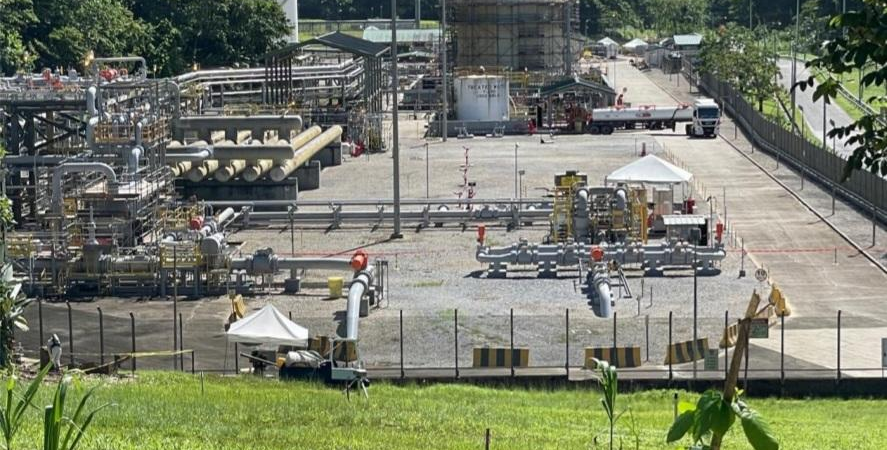
As part of his EMA complaint, the complainant requested that the authority conduct a full site-specific hydrogeological groundwater study to determine whether contaminants have infiltrated nearby environments.
His request follows a July 2023 incident in which his geotechnical drilling crew encountered strong hydrocarbon odours at a borehole near the Beachfield gas-processing facility. The incident records also describe VOC readings taken at the borehole and from collected samples.
Volatile organic compounds (VOCs) – a broad group of carbon-based chemicals that readily evaporate into gases or vapours at ordinary temperatures. They can come from fuels, petroleum products, solvents and many other industrial or natural sources. Benzene is one type of VOC, but a general VOC reading does not establish that the detected vapours were benzene or identify how much benzene was present.
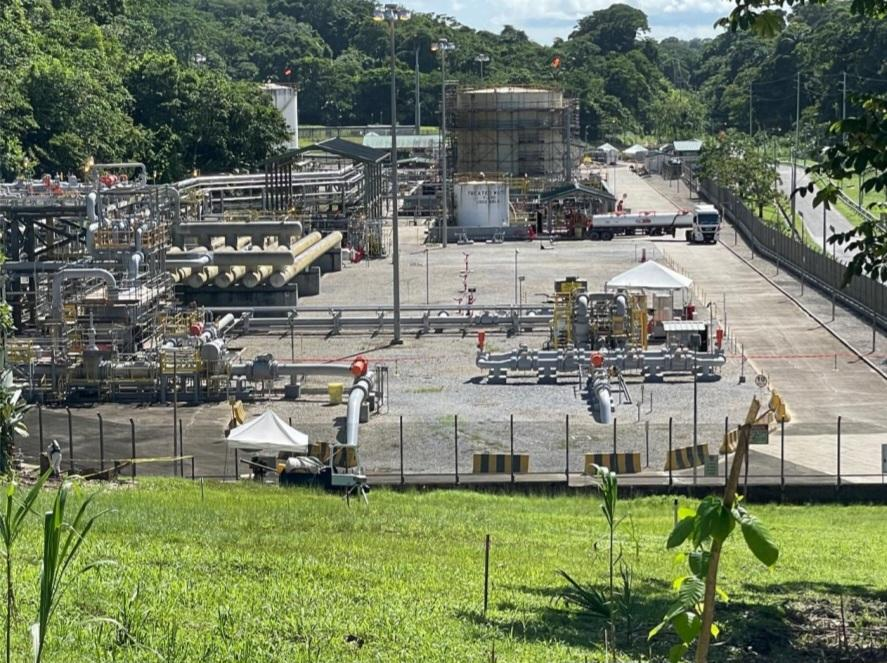
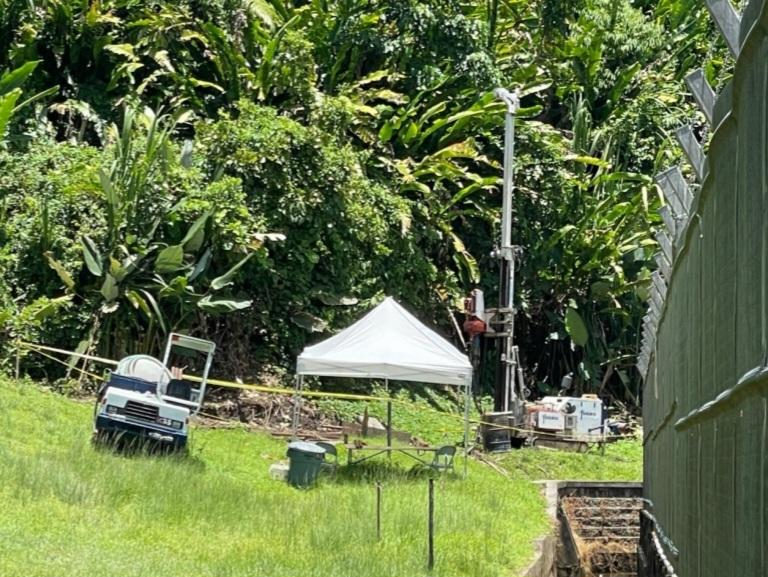
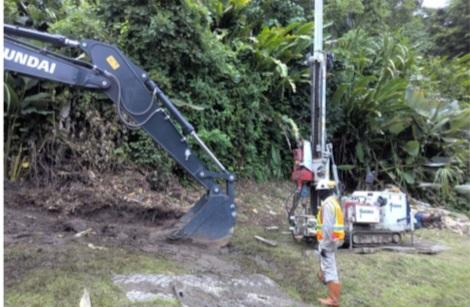
The 2023 drilling, carried out by Shell contractor Fugro USA Land, formed part of geotechnical work for the Manatee project.
The Manatee project is an offshore natural gas development operated by Shell, located around 100 km off Trinidad’s east coast. It is the Trinidad portion of the cross-border Loran-Manatee field shared with Venezuela.
Beachfield Drilling Incident: Reported Symptoms and Monitoring Results
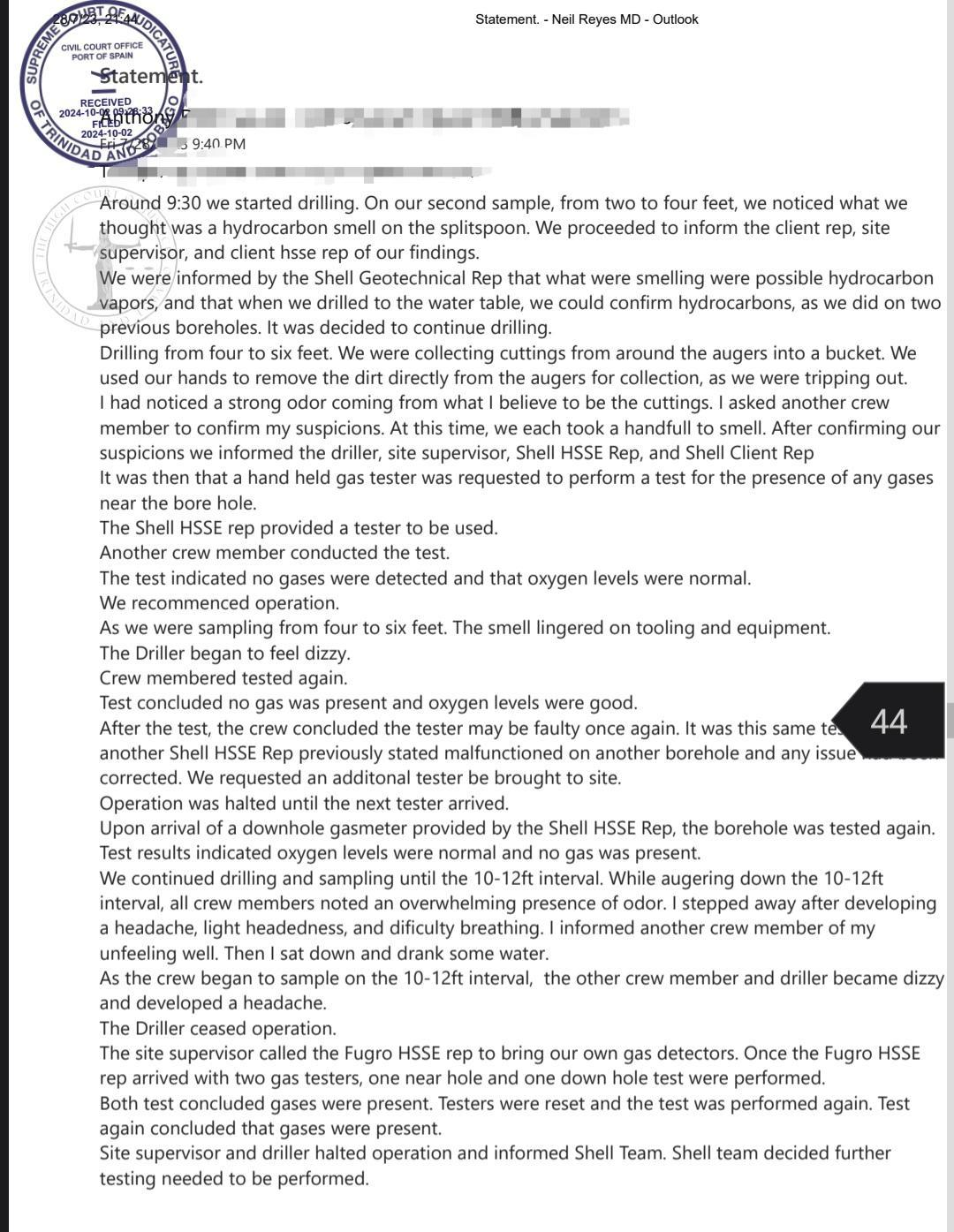
Documents reviewed by ROOTT recorded strong hydrocarbon odours at borehole PL-BH-16B on July 28, 2023. A Fugro incident report recorded: “12:10 pm – Crew members reported feeling dizziness, light-headedness, and shortness of breath.”
According to Fugro’s final incident report, Shell monitoring equipment initially returned VOC readings of 0 ppm. The report stated that two Shell photoionisation detectors (PID meters) were not in calibration at the time of testing.
PID – Photoionisation detector, an instrument used to detect volatile organic compounds in air. It does not necessarily identify a specific chemical unless designed and configured to do so.
The final Fugro report subsequently recorded “104 Parts Per Million (PPM) of VOC” inside the borehole and “474 PPM of VOC” in collected bag samples.
These readings concern different sampling conditions and do not establish individual workers’ breathing-zone exposure or how much benzene, if any, each worker inhaled.
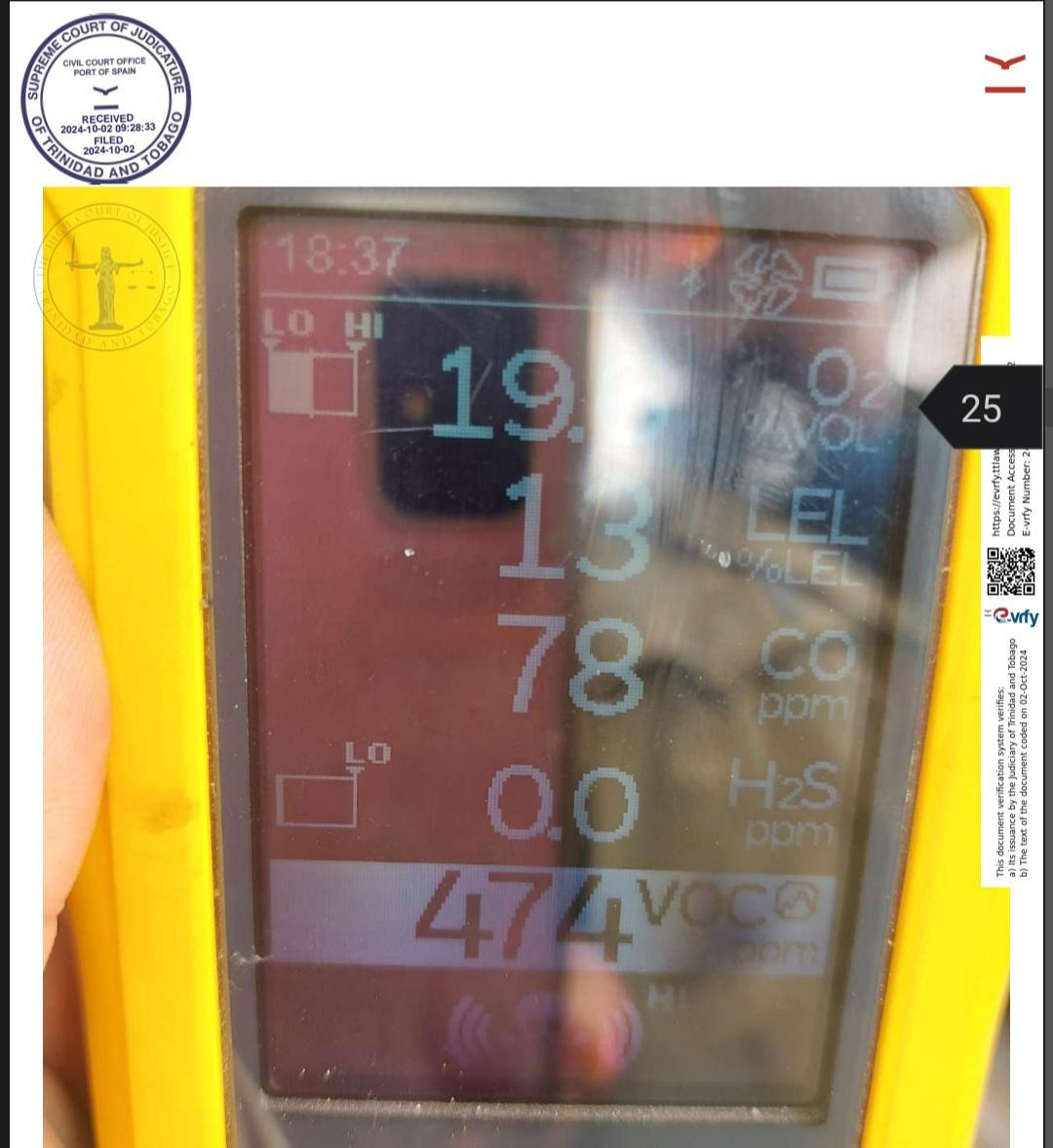
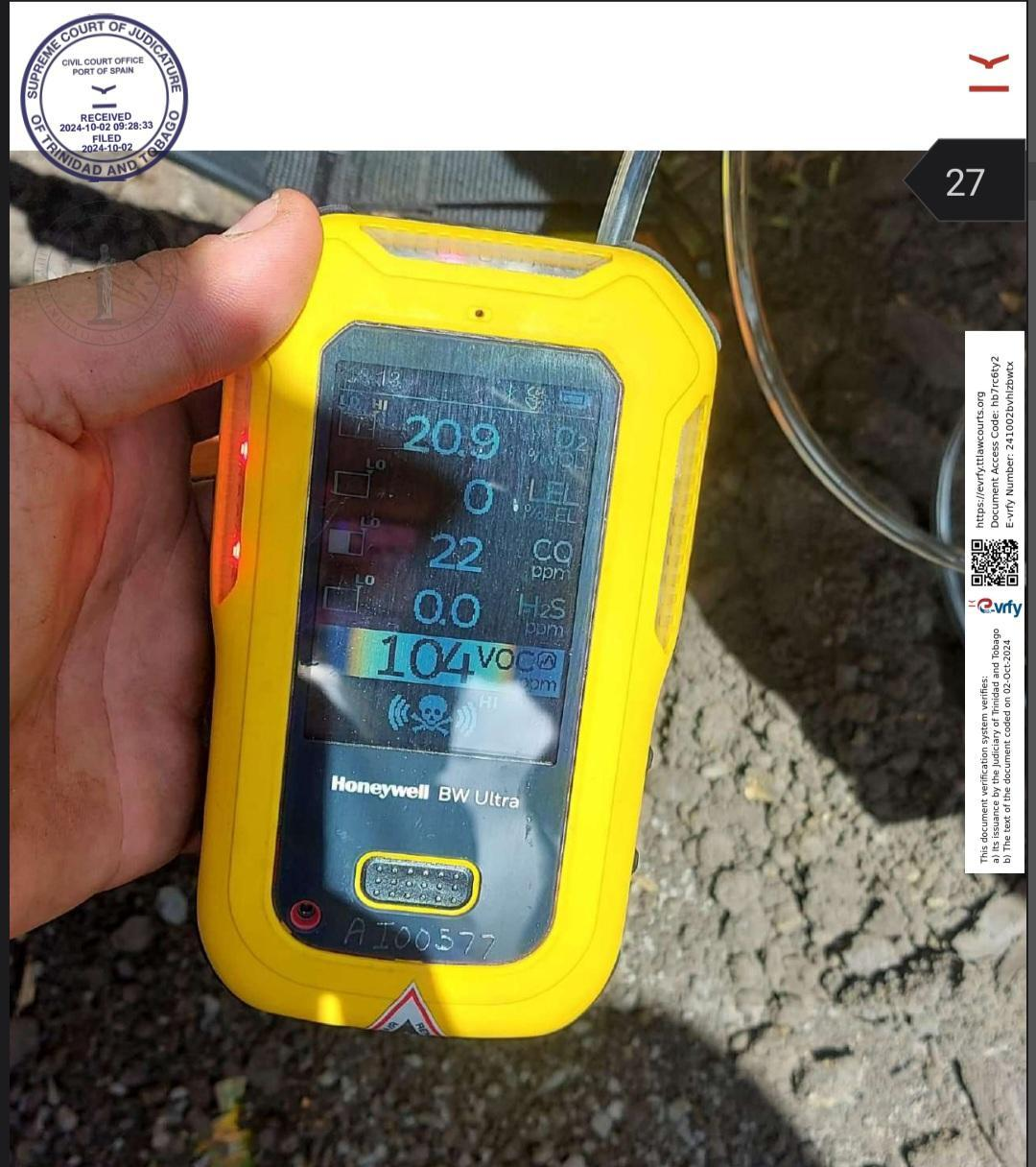
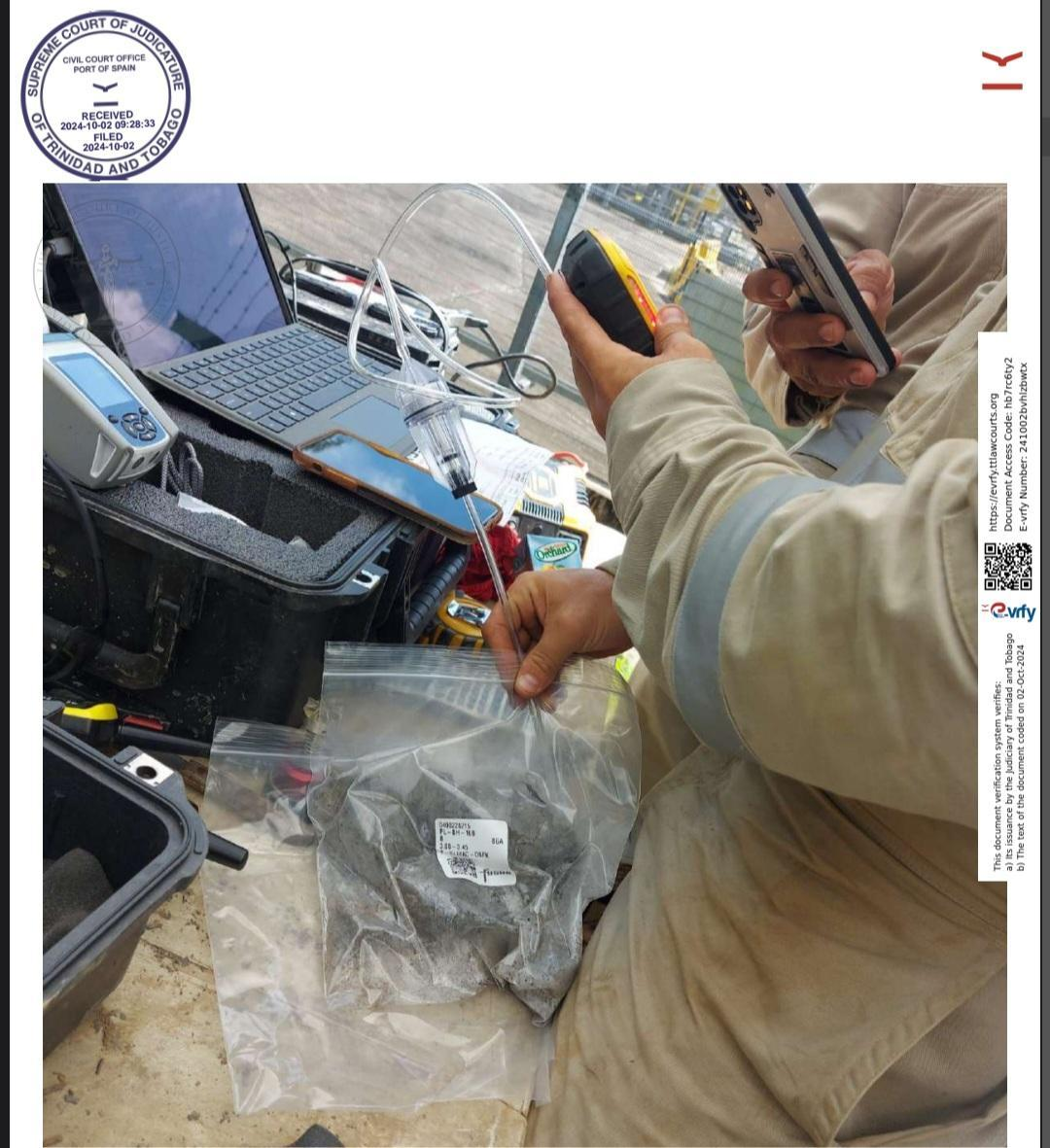
A Shell benzene instrument recorded 13 ppm near the borehole. The final report stated that the equipment had not been verified as calibrated at the time.
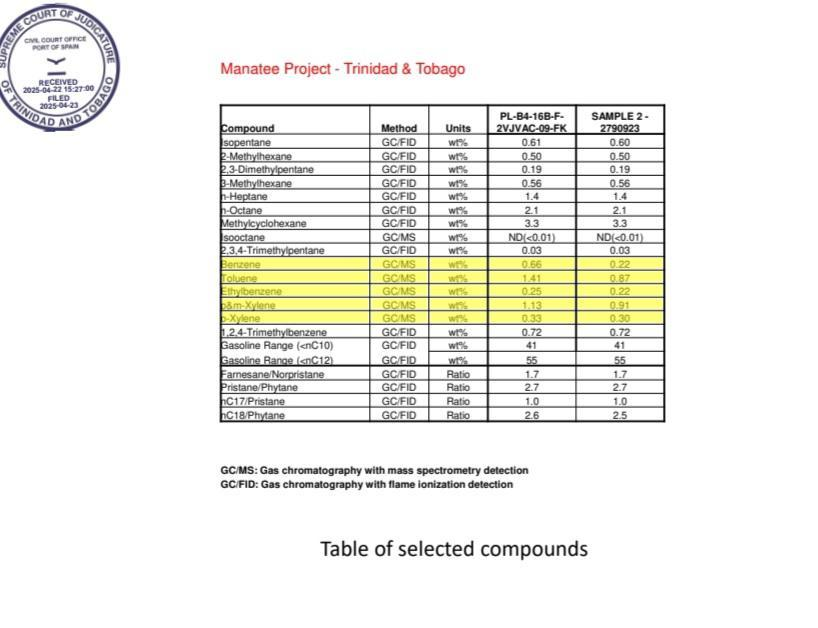
A worksheet from Rose Environmental dated July 30, 2023, recorded results for surrounding locations and selected samples tested two days after the incident.
The worksheet recorded benzene readings of 0 ppm in the hole area, at locations north, east, south and west of the hole, and at equipment. A recorded zero should not be interpreted as proof that benzene was absent under all conditions.
The worksheet also listed a reading of 102.5 ppm associated with a sample labelled B6A.
Testing two days later did not establish conditions during the incident, as individual workers’ inhalation exposure was not established.
Benzene can cause serious health effects.
New Jersey’s Department of Health identifies symptoms including headache, dizziness, nausea and vomiting, and warns that high exposure can cause severe outcomes, including convulsions, coma or sudden death from an irregular heartbeat. Those general hazards do not establish the dose received or injury caused in this incident.
For context, the US Occupational Safety and Health Administration’s benzene standard specifies an eight-hour average exposure limit of 1 ppm and a 15-minute average limit of 5 ppm for workplaces covered by that standard. These US limits are contextual benchmarks, not a finding about the law applicable to this Trinidad incident.
Honganen’s Interpretation and Shell’s Recorded Position
In his complaint to the EMA, Honganen argued that later laboratory analysis of recovered hydrocarbon material was more consistent with gas condensate or very light crude from a human-made source, such as a pipeline, than with a natural seep. ROOTT has not independently verified that interpretation.
Fugro’s final incident report stated that “Naturally occurring hydrocarbon seeps were known to exist in the vicinity.”
The report also stated: “During the incident review Shell confirmed to Fugro that they didn’t have any prior knowledge, information, or specific site history that indicated the presence of Benzene or any Benzene derivatives within the near surface sediments at this site.”
The references to hydrocarbon seeps in the vicinity and benzene at the specific drilling location concern different questions and do not, by themselves, establish a contradiction.
The source of the hydrocarbons has not been independently established.
When contacted for comment in October 2026, Shell’s Communications Department said the matter is under active litigation and therefore the company could not comment on the allegations at this time.
Fugro’s Initial and Final Reports on the 2023 Beachfield Drilling Incident
Two versions of the Fugro incident report, the initial report and the final report, contain differences in wording and detail, including their treatment of prior knowledge and location history.
The first report was titled “NM – Acute Overexposure to Benzene”, while the later report was titled “Near Miss – Potential Acute Exposure to Benzene”.
The initial report identified a failure to react or correct conditions after the first warning signs, noting that nothing changed because the gas monitor was not detecting gases.
Its root-cause section also stated that location-history information had not been supplied and had been reported as unknown when requested.
The later report instead recorded Shell’s statement that it had no prior knowledge or specific site history indicating benzene or benzene derivatives in the near-surface sediments at the location.
The documents record changes in wording, but do not establish who authorised the revisions or why.
The final report identified shortcomings in monitoring and hazard identification. Its immediate-cause entries included “Failure to check/monitor/measure inspect” and “Failure to identify Hazard/risk – Benzene was an unknown risk at time of operation.”
The final report also recorded that Fugro’s gas-monitoring equipment was not initially on site and had been left at the accommodation. The crew relied on Shell’s instruments until Fugro’s equipment arrived. The report identified the absence of Fugro’s monitor, despite hydrocarbons having been encountered previously, as part of the failure to check and monitor conditions.
In his report, Honganen alleged that Shell did not initially provide all of the incident records and data he requested after the incident.
A May 2024 Shell response quoted in the evidence package said the requested analytical test results, mass-spectrometry results and Fugro Final Incident Report were “internal to STTL and are subject to strict confidentiality and privacy rules” and added: “As such, they cannot be disclosed without violating our internal policies and potentially infringing on privacy regulations.” Some analytical material was subsequently produced through court proceedings.
In the same May 24, 2024 letter declining to release the requested records, Shell said it took the concerns seriously, prioritised the health and safety of those involved in its operations, and was conducting an internal investigation.
Honganen maintained that disclosure remains incomplete, including chain-of-custody and identifying information for some samples.
According to material submitted with the EMA complaint, samples from the borehole were originally collected for geotechnical rather than environmental analytical purposes and were not preserved under environmental sampling protocols.
Honganen argued that this could have allowed volatile compounds to dissipate before testing.
Taken together, the records document reports of strong hydrocarbon odours and acute symptoms during drilling, followed by VOC readings at the borehole and in collected samples. They also record a benzene-instrument reading near the borehole, subject to the calibration qualification described above.
The precise airborne benzene concentration, duration and individual dose remain unresolved.
ROOTT reviewed medical material concerning Honganen but was asked not to disclose the specifics. That material does not, by itself, establish that any medical findings were caused by the July 2023 incident.
Honganen Questions Benzene and Soil Data in the Manatee Assessment
As part of his complaint to the EMA, Honganen asked whether warning signs of contamination existed long before the July 2023 drilling incident, and whether they were properly assessed, communicated and acted upon.
Honganen also questioned what historical contamination information in the Manatee Environmental and Social Impact Assessment (ESIA) was available before the incident.
As part of the evidence submitted with his EMA complaint, Honganen produced groundwater-monitoring data from the Environmental and Social Impact Assessment (ESIA), including a March 2012 entry for monitoring well MW-8. In the table, the benzene value appears as “2510” beneath an mg/L heading.
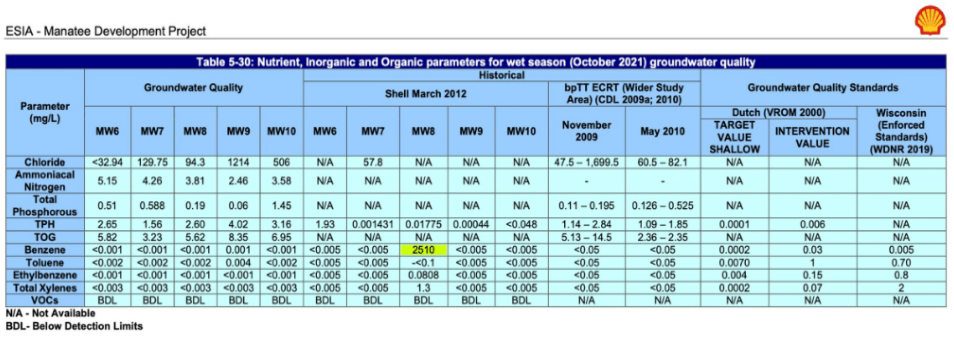
Honganen questioned the units or formatting of that entry and proposed that it should be read as 2.510 mg/L, or 2,510 micrograms per litre. ROOTT has not independently established the intended unit or concentration from the reproduced table alone. Verification requires the original table, its footnotes and the corresponding laboratory certificate.
Honganen separately questioned how soil-contamination results were presented in the Manatee environmental assessment.
Honganen identified what he considers a discrepancy between laboratory reports reproduced in his evidence bundle and Table 5-33 of the assessment. The laboratory reports express total petroleum hydrocarbons (TPH) as percentages, while the assessment table presents numerical values under a milligrams-per-kilogram heading.
For example, a laboratory entry for Soil Sample 2 is 0.09 per cent, equivalent to 900 milligrams per kilogram, while an entry for Station 2 in the assessment table is 0.09 milligrams per kilogram. Establishing whether these entries represent a reporting discrepancy requires confirmation that they concern the same sample, analyte, date and reporting basis.
Honganen argued that the apparent discrepancy understated the contamination indicated by the laboratory results. The reason for the difference and any effect on the regulatory assessment require clarification from the companies involved and the EMA.
ROOTT has not established the reason for the apparent discrepancy, who was responsible, or whether it affected the regulatory assessment.
The different units warrant verification against the original laboratory records and assessment tables before conclusions are drawn about the scale or significance of any discrepancy.
In the evidence submitted with his complaints, Honganen argued that the historical monitoring results warranted investigation irrespective of the disputed presentation of the data.
He interpreted the 2012 environmental assessment data and 2023 total petroleum hydrocarbons data as pointing to “A persistent, benzene-rich condensate plume present in the Beachfield shallow aquifer for many years, migrating along the ENE-trending valley towards PL-BH-16B (The borehole where the exposure event occurred) and on to the Pilote River and Coastal Plain.” ROOTT has not independently established the existence, composition, extent or movement of the proposed plume, or whether contaminants have reached the Pilote River. Those questions require independent hydrogeological and petroleum-forensic assessment.
TPH is a term used to describe the overall concentration of a broad range of hydrocarbon compounds associated with petroleum products, including fuels and oils. A TPH result can indicate petroleum contamination, but by itself does not identify every individual chemical present.
Historical results do not, by themselves, establish current environmental conditions or what information was available to particular decision-makers before drilling.
According to Honganen, the material “raise[s] questions about prior benzene findings, unit conversions, omissions or gaps in monitoring data, and whether contamination conditions or risks were fully and transparently reflected in environmental reporting.”
If Honganen’s proposed interpretation were verified, the entry would represent a historical benzene finding in groundwater. Pending verification of the original records, it is an entry requiring clarification rather than a proven corrected concentration.
Honganen Cites 2021 Groundwater Data in EMA Complaint
As part of his evidence package to the EMA, Honganen also points to October 2021 monitoring-well data which he says was reproduced from the Manatee ESIA.
The addendum alleged that wells MW-6 through MW-10 showed elevated total petroleum hydrocarbons in groundwater around and downgradient of the Beachfield condensate-storage area, which Honganen interprets as evidence consistent with a possible leak.
That interpretation has not been independently verified and requires hydrogeological and petroleum-forensic assessment. TPH is a broad measure of petroleum-related compounds and does not, by itself, identify benzene or establish the source of contamination.